Get your building's move rules in writing
Most apartment complexes, condo HOAs and high-rises have written move rules, and they're different at every building. Ask the leasing office or HOA manager for them as soon as you have a date, at the building you're leaving and the one you're moving into. You're looking for:
- Allowed move days and hours, and any quiet hours
- How to reserve the elevator or loading dock, and for how long
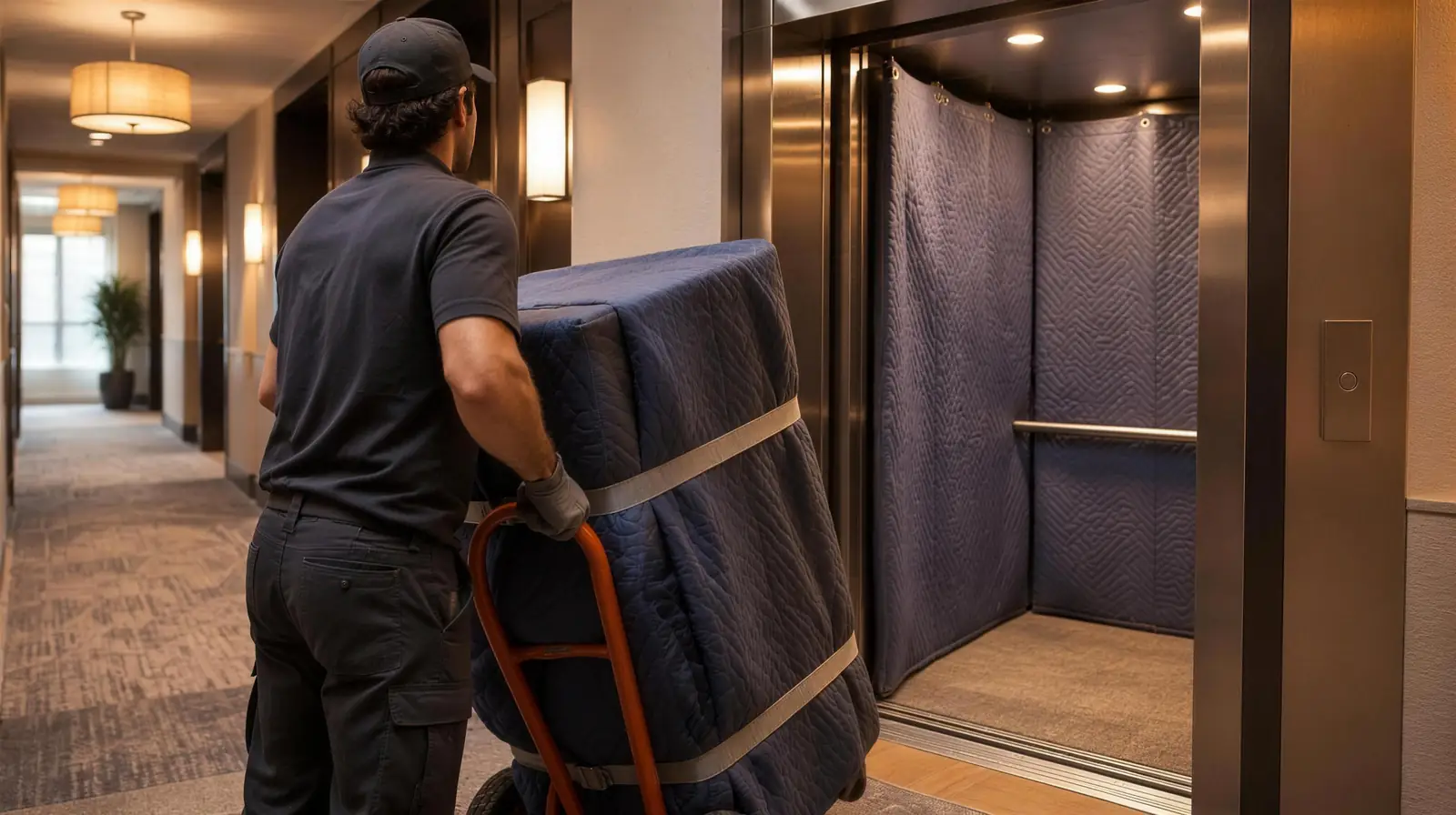
- Whether elevator pads or a key are needed, and who provides them
- Any move fee or refundable deposit
- Whether the building requires a certificate of insurance from the mover, and the exact wording it wants
- Where a moving truck is allowed to park or load
Send those rules with your quote request. They decide the start time, the crew size and sometimes the truck.
Elevators, stairs and long carries
Every building type has its own bottleneck, and the plan has to start there.
| Building | Common bottleneck | Planning step |
|---|---|---|
| Garden-style walk-up | Stairs, often with a tight landing turn | Count the flights and measure the landing |
| Mid-rise with one elevator | Sharing the car with residents | Reserve it, or move at the quietest hours allowed |
| High-rise with a freight elevator | Dock and elevator time slots | Book the slot, then schedule the crew to it |
| Older building | Narrow stairwells and doorways | Measure large pieces against the tightest point |
| Large complex | A long walk from the parking lot | Find the closest legal loading spot to the unit |
A long carry or a slow elevator adds a little time to every single trip, and an apartment move is a lot of trips. Tell us the distance from where the truck can stop to your door, and which floor you're on at both ends.
Elevators have size limits that catch people off guard. A passenger car may take a dresser easily but not a tall bookcase or a long sofa, and some buildings only let long pieces ride standing on end when the elevator is switched to service mode. Ask what your building allows, and measure the car's inside height as well as its floor.
Will the furniture fit?
Measure before you move, not on the landing. Check the width and height of every door on the path, the hallway, the tightest stair turn, and the inside of the elevator, including its height and the diagonal. Then measure your largest pieces: sofa, sectional pieces, mattress and box spring, dresser, desk.
Many pieces can come apart. Sofa legs unscrew, bed frames break down, and some sectionals separate. Box springs are a common problem in tight stairwells because they don't bend. A split box spring is the usual fix.
Parking the truck at an apartment or condo
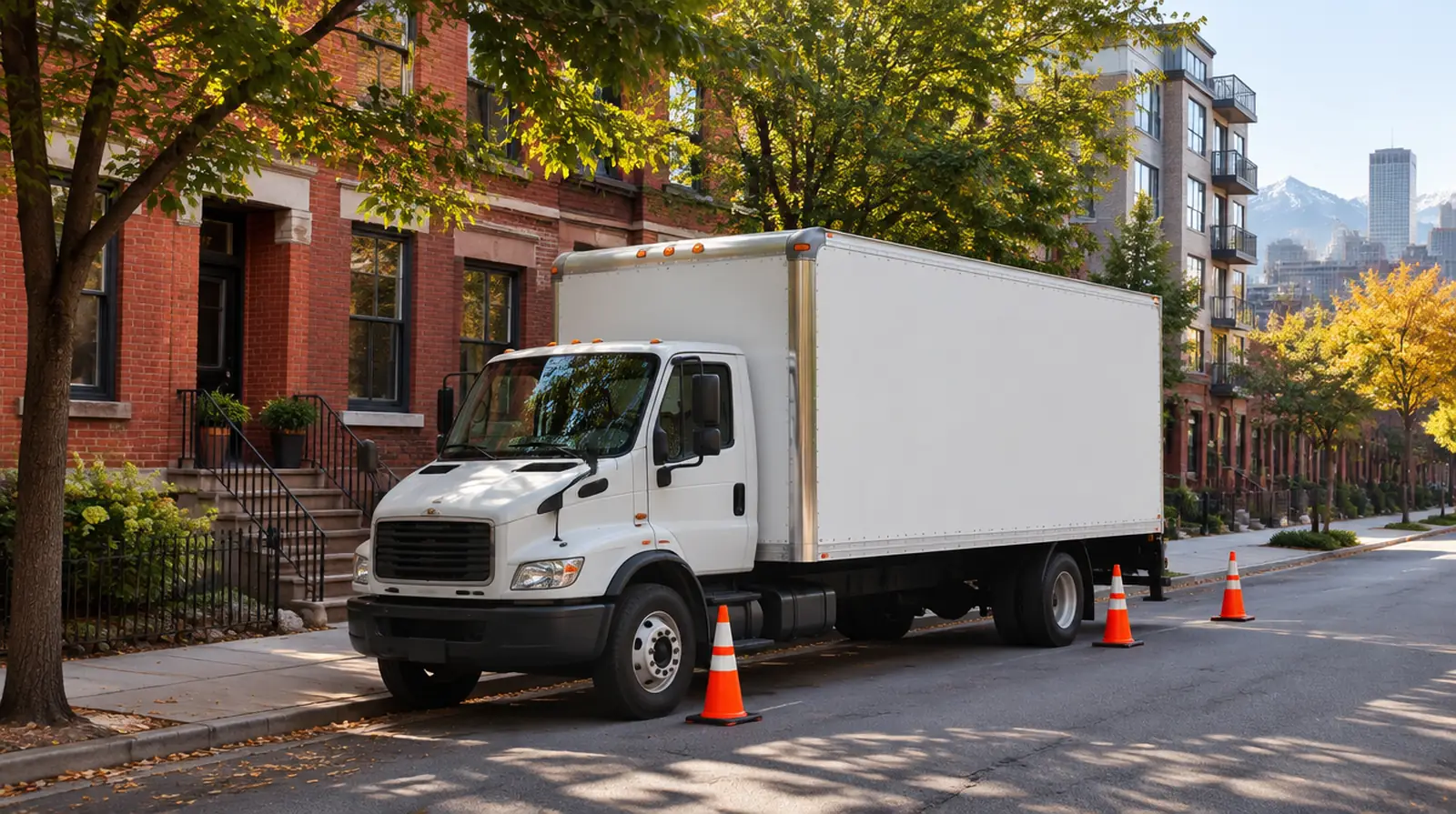
A moving truck can't use most parking garages. The clearance is too low, so plan on loading from the street, an alley, a loading zone or a surface lot. Downtown and in older central neighborhoods, curb space is tight and towing is common. Some Colorado cities require a permit to hold curb space for a truck, so check with the city before move day.
Think about both ends together. A suburban complex with a wide lot and a downtown building with a shared dock are different problems, and the truck may need to suit the tighter of the two. Tell us about gates, low carports, speed bumps and sharp turns in the parking lot, and send a photo of the entrance if you can.
Move-out and move-in day
On the way out, take dated photos of each room once it's empty, return keys and fobs the way your lease says, and leave time for any move-out inspection. On the way in, photograph the unit before anything comes off the truck. Those photos protect a deposit at both ends.
When both moves happen on the same day, compare the two buildings' windows side by side. If the move-out window at the old building ends after the move-in window at the new one closes, your things spend the night on the truck. Shift one reservation before you book anything else.
Hallway walls and elevator interiors take the most bumps on an apartment move, so pads go up in the elevator and corners get protected along the path where the building allows it.
If this, then that
- If your lease ends on the last day of the month, then book early, because month-end is when most apartment moves happen.
- If you're moving from a house into a condo, then decide what fits before packing starts. Our downsizing moves page covers how to sort it.
- If both buildings only allow weekday moves, then line up time off work for the day itself.
- If you'd like the boxes handled too, then add our packing services to the quote.
Check your mover before the building does
Many buildings will ask your mover for a certificate of insurance naming the building or HOA before they release the elevator. Get the building's exact requirements early and send them with your quote request, so the certificate can be arranged before move day.
Movers that carry household goods within Colorado register with the Colorado Public Utilities Commission. Look up any mover's registration in the PUC's records before you book, including ours. For moves that stay in the same metro, our local movers page covers the rest of the plan.
The bottom line
Building rules in writing, an elevator reservation, measurements of the big pieces and a legal place for the truck. Get those four settled and an apartment move becomes a straightforward day.
Request a moving quote and include both buildings' move rules and floor numbers.