When a move needs storage
Storage turns one move into two: into storage, then out of it. That's worth it when the timing or the space doesn't work any other way.
| Situation | What storage solves | What to plan |
|---|---|---|
| Closing dates don't line up | A place for the household between homes | The likely length, and what you'll need while you wait |
| Remodel at the new home | Furniture out of the way of the work | What can go in the finished rooms first |
| Downsizing | Pieces waiting for family or a sale | Who collects them, and when |
| Selling a home | Fewer things in the house during showings | What stays for staging, and what goes |
| Relocating into temporary housing | The household held until a permanent home is found | Access, in case you need something out |
Downsizing is one of the most common reasons. Our senior and downsizing moves page covers how to decide what goes into storage and what doesn't.
Storage options compared
There are three common ways to store household goods during a move, and each one changes who handles your things and how often.
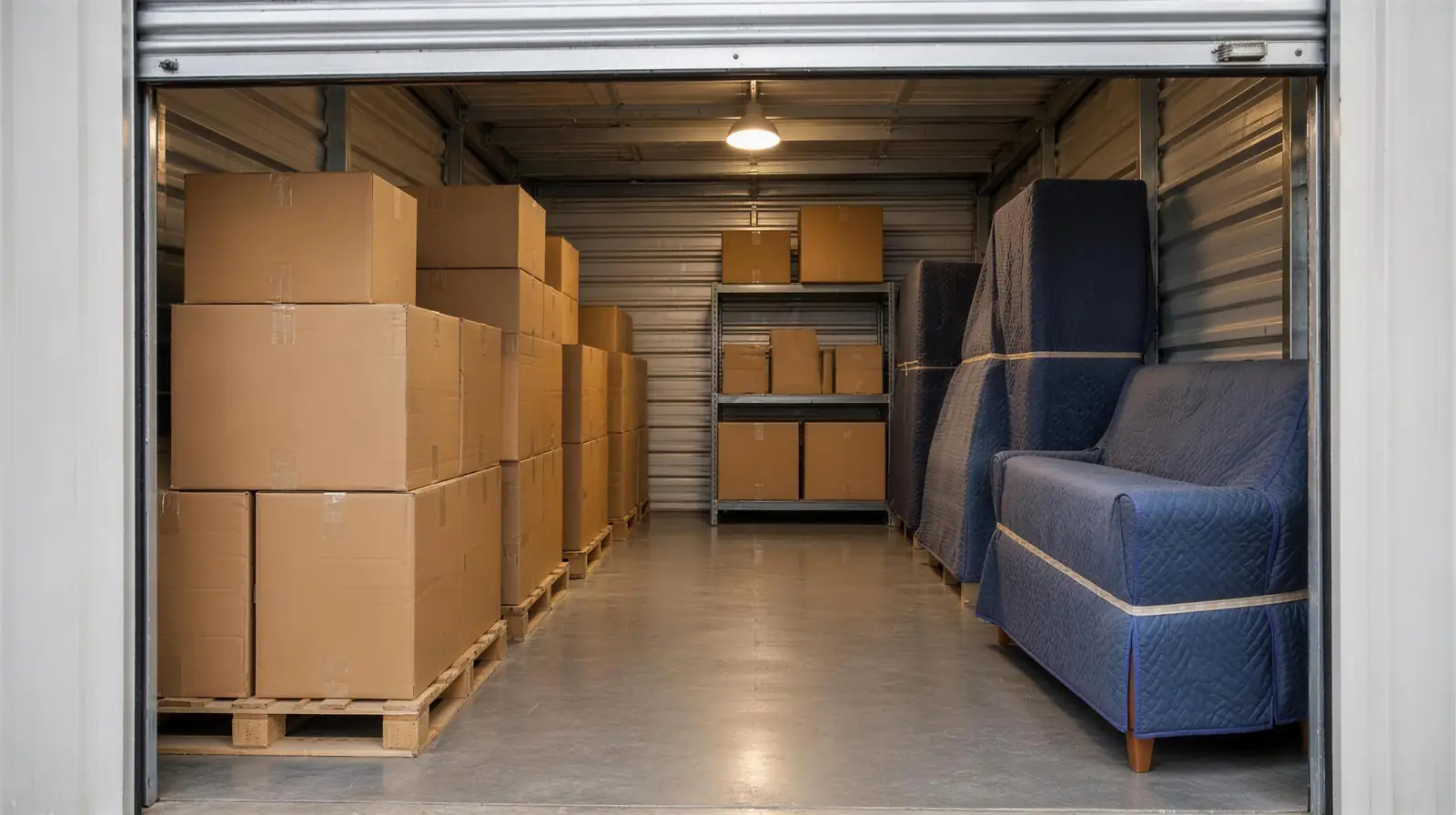
A self-storage unit is rented in your name. You hold the key and can get in during the facility's access hours. Movers load it on the way out and unload it on the way back. A mover's warehouse storage keeps goods with the moving company, often in wooden vaults, with access by appointment. A portable container is dropped at your home, loaded, and then stored at a yard or moved to the new address.
On interstate moves there's also storage-in-transit, where the carrier holds your shipment for a period before delivery. The terms and charges for it belong on your moving paperwork. Read them before you sign, because storage held past that period can fall under different terms.
If this, then that
- If you'll need things out while they're stored, then choose storage you can open yourself.
- If the gap is short and the move is crossing state lines, then ask the carrier about storage-in-transit.
- If the new home has no room for a container in the driveway or on the street, then a container is a poor fit at that end.
Colorado conditions inside a storage unit
Colorado's dry air and wide temperature swings are hard on stored furniture. Solid wood shrinks as it dries and can crack or loosen at glued joints. Pianos and other instruments drift out of tune and can be damaged by big swings. In an unheated unit, winter brings freezing temperatures, and anything with water in it can freeze and burst.
Climate-controlled storage is worth considering for wood furniture you care about, instruments, photographs, documents, artwork and electronics. Rural and mountain units add two more concerns: rodents, so store no food and seal soft items, and snow, which can block access to drive-up doors in winter.
Packing for storage is different
Boxes packed for a one-day move don't always hold up for months. Storage asks more of them.
- Use sturdy boxes in a few standard sizes so stacks stay square
- Fill every box to the top so it won't crush under the one above it
- Pad wood furniture with breathable blankets, not plastic sealed against the finish
- Bag mattresses and keep them flat or on edge as the maker recommends
- Keep furniture and boxes off bare concrete with pallets or a ground cover
- Number every box and keep a matching list of what's inside
- Prop refrigerator and freezer doors slightly open so they don't trap moisture
- Leave an aisle, and load what you'll need first near the door
Our packing services can pack the house with storage in mind, so the load goes in labeled and comes out in the order you'll unpack it.
Liability and records while things are stored
The liability a mover accepts while your goods are on the truck may not be the same once they're sitting in storage. Ask for both in writing. A self-storage facility has its own rental agreement, and its terms usually limit what it's responsible for. Your homeowners or renters policy may cover belongings stored away from home, so check with your insurer before the first box goes in.
Keep the rent current too. Under state law, a storage facility can deny access to a unit with unpaid rent and eventually sell what's inside, so set up automatic payment if the storage could run longer than planned.
Two moves, one plan
Plan both legs at once. The move out of storage depends on the facility's access hours, the gate code, the unit's location (a ground-level drive-up door or an upper floor with an elevator) and whether a truck can turn around inside. Give us those details with the original quote request.
For long moves that need storage in the middle, see our long distance movers page for how interstate storage and delivery timing work. And whatever company handles your move, check its registration with the Colorado Public Utilities Commission for in-state moves, or its USDOT number with FMCSA for interstate moves.
The bottom line
Choose storage by how often you'll need access, protect wood and anything that can freeze, and keep a numbered inventory from the first box in to the last box out.
Request a moving quote and tell us your dates, the storage you have in mind and how long it may last.