Full packing, partial packing or packing yourself
There's no right answer for every household. It comes down to time, how much is fragile and how far the boxes are going.
| Option | What it covers | Fits when |
|---|---|---|
| Full packing | Every room, closets, garage shelves and the kitchen | You're short on time, moving a long way, or moving a large home |
| Partial packing | The rooms you pick, usually the kitchen and any glass or art | You can handle books, clothes and linens but not the breakables |
| Fragile-only | Mirrors, artwork, lamps, TVs and glass tabletops | Most of the house is easy and a few pieces worry you |
| Packing yourself | Everything, with your own supplies and labels | You have weeks, not days, and a short local move |
A long haul raises the stakes. Boxes on a long-distance move ride for days and get handled more times, so weak packing shows up as damage.
How professional packers handle a kitchen
The kitchen takes the most time and the most material of any room. Dishes, glasses, small appliances and pantry goods all pack differently.
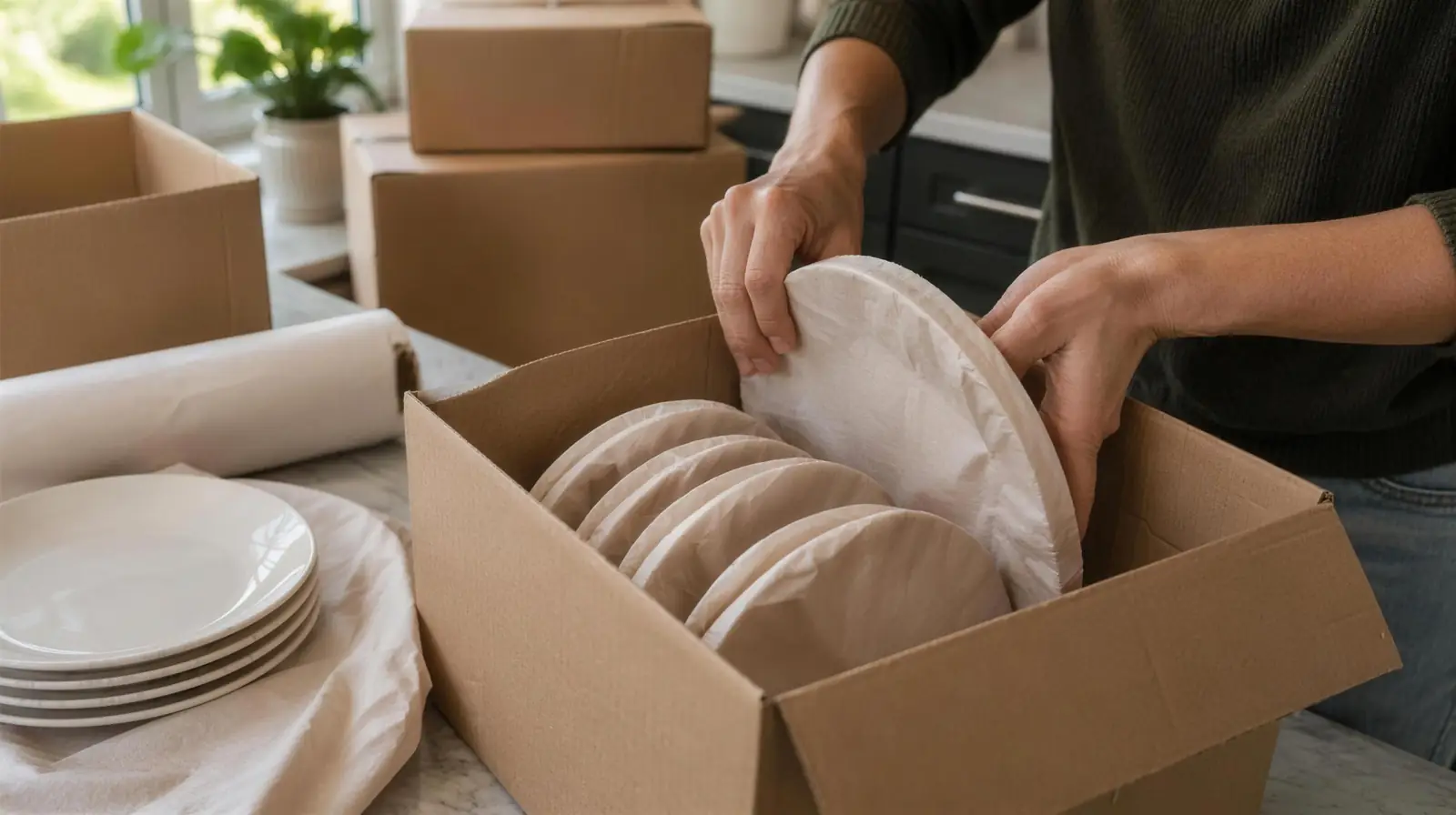
Plates go into heavy-duty dish boxes standing on edge, each one wrapped in paper, with a cushion of crumpled paper on the bottom. Standing them on edge spreads the force of a bump across the rim. Glasses and stemware get wrapped and set upright in divided cell boxes. Heavy items go low, light items on top, and every gap gets filled so nothing can shift. A box that rattles when you tip it isn't done.
Knives get wrapped and labeled. Small appliances travel best in their original boxes if you kept them. Open food, cleaners and liquids in the pantry usually don't belong on the truck at all, so use them up or give them away in the weeks before the move.
If the refrigerator is moving, empty it, unplug it and leave the doors open the day before so the freezer can defrost and the inside can dry. A fridge closed up wet for a day or two in a truck can come out smelling of mildew. Drain the water from coffee makers and countertop appliances too.
Furniture, art, mirrors and TVs
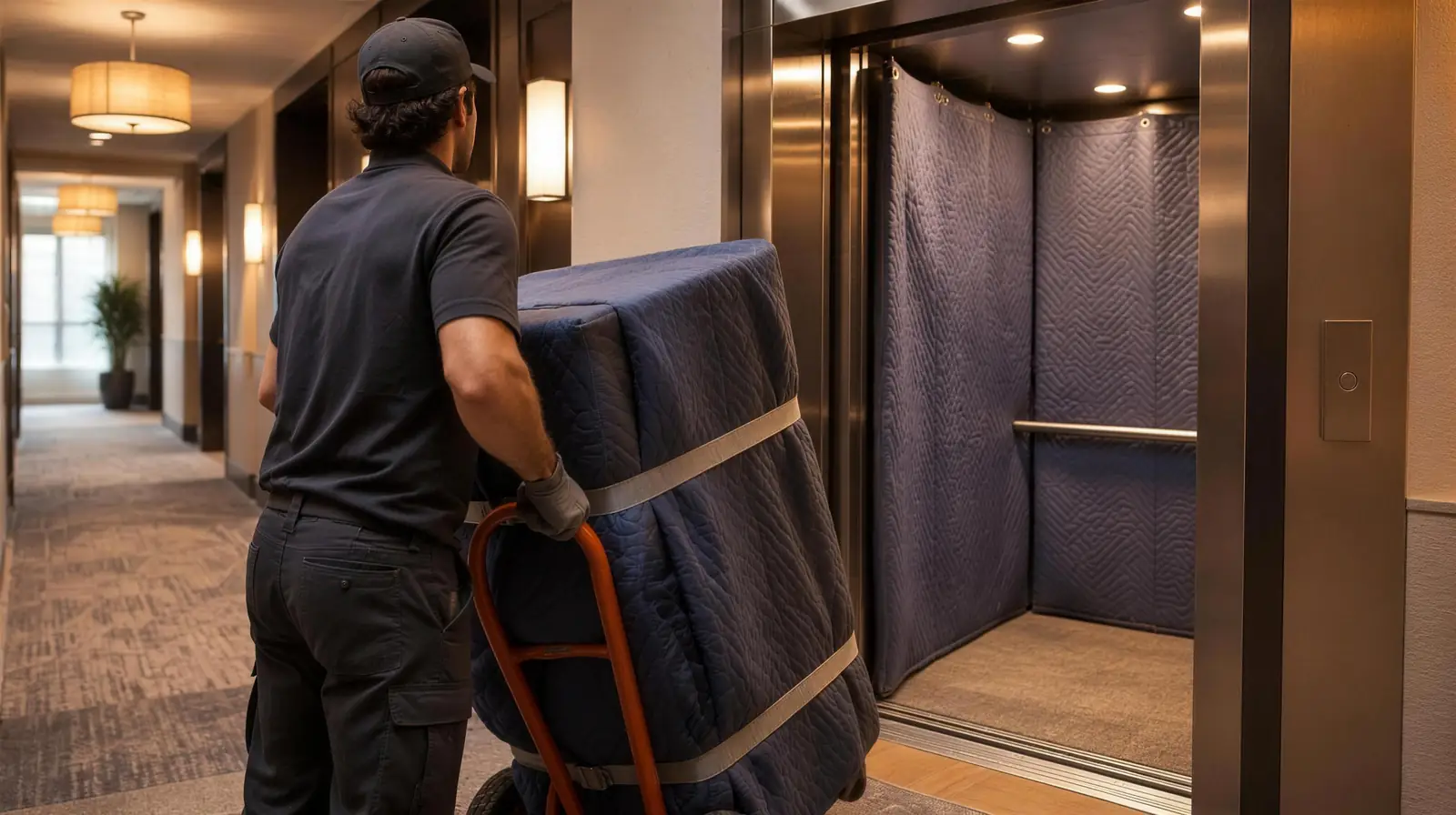
Big pieces get padded with moving blankets first, then wrapped to hold the pads in place. Plastic wrap pressed straight onto a finished wood surface can trap moisture and mark the finish, so the blanket goes on first.
Mirrors and framed art go into mirror cartons sized to the piece, with corners protected. Very large glass, stone tabletops and valuable art may need a custom crate. Lamps travel with shades and harps removed and boxed on their own. Glass shelves come out of cabinets and hutches and get wrapped separately, since a shelf left loose inside a cabinet can shatter on the first bump. Table legs and bed hardware are bagged, labeled and kept with the piece they belong to.
Boxes you pack yourself
If you're packing some or all of the house, a few habits prevent most of the trouble:
- Put books and other heavy things in small boxes, and light linens in large ones
- Tape the bottom seam and both edges, and tape the top the same way
- Fill boxes to the top so they don't crush when stacked
- Label two sides and the top with the room and a short description
- Mark boxes with fragile contents, and pack those yourself only if you're confident
- Seal every box before the crew arrives
One thing to ask about before you start: a mover can't see how a box was packed if the owner packed it. Many movers treat damage to the contents of owner-packed boxes differently from boxes their own crew packed, especially when the outside of the box shows no damage. Ask your mover how it handles that, in writing.
Some things don't go on a truck at all, no matter who packs them: propane tanks, gasoline, paint thinner and other flammables, ammunition and many pressurized cans. Ask for the full list early.
What to keep out of the boxes
Some things should ride with you in your own car, not on the truck. Medications, passports and birth certificates, financial records, jewelry, laptops, chargers, keys and the paperwork for the move itself all belong in a bag you keep in sight.
Colorado weather adds a few more. In winter a truck's cargo box gets as cold as the outside air, and liquids can freeze and burst. Wine, houseplants and anything water-based travel better in a heated car. Electronics that ride in the cold should warm up to room temperature before you plug them in, so condensation inside them has time to dry.
Add a first-night box: sheets, towels, a shower curtain, toilet paper, a few dishes, a kettle or coffee maker, and a basic tool kit. Mark it so it comes off the truck last and opens first.
Unpacking at the new home
Unpacking is the part most people underestimate. A full unpack means boxes are opened, contents go onto counters, shelves or beds in the right rooms, and the paper and empty boxes are gathered up. A partial unpack usually covers the kitchen and beds, so the house works on night one and the rest can wait.
Order matters when you unpack yourself. Start with the kitchen and bathrooms, then beds, then living areas, and leave storage rooms and the garage for last. Flatten empty boxes as you go so they don't fill the rooms you're trying to set up.
Unpacking help is especially useful on senior and downsizing moves, where getting a bedroom and kitchen fully set up the same day matters most.
The bottom line
Decide who packs each room before you book, keep fragile and valuable items out of guesswork, and plan the first night at the new place before the first box is taped.
Request a moving quote and tell us which rooms you'd like packed and whether you want unpacking too.