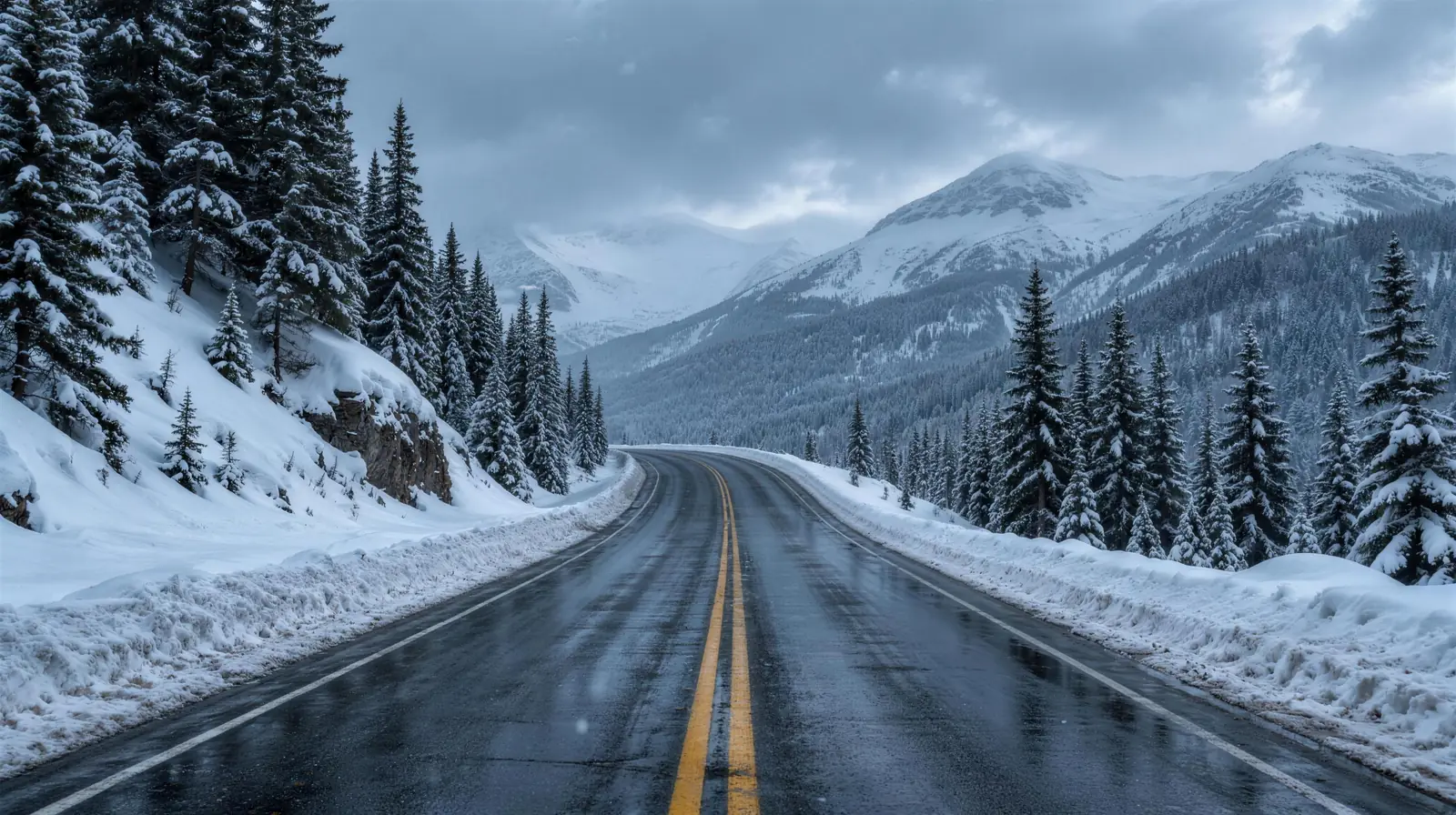
Moving over I-70 in winter is mostly a scheduling problem. The truck can make the drive. What it can't do is cross the Continental Divide while the highway is closed, and between November and spring that can happen with a few hours' notice. The plan that works treats the pass as an unknown and builds the move around it.
That means a buffer day, a backup place for your belongings to wait, and a decision point the day before departure. Here's how that plays out from two weeks out to the morning the truck leaves.
Know What the Route Crosses
I-70 west of Denver is the main route over the mountains, but it isn't the only one with winter problems. Any move that leaves the Front Range for the high country, the Western Slope or another state crosses something that weather can shut.
| Route | What it crosses | Winter watch-outs |
|---|---|---|
| I-70 west of Denver | The Eisenhower-Johnson Memorial Tunnel, Vail Pass, Glenwood Canyon | Long, steep grades both ways, traction and chain laws, closures for crashes and avalanche control |
| US 285 southwest | Kenosha Pass and other passes through South Park | Two-lane stretches, slow climbs, fewer places to wait out a storm |
| US 40 | Berthoud Pass toward Winter Park | Switchbacks and steep grades on a two-lane road |
| I-25 south | Monument Hill on the Palmer Divide | Snow and closures between Denver and Colorado Springs during storms |
| I-70 and I-76 east | The eastern plains | Wind and blowing snow that can close interstates with no mountain in sight |
The eastern routes surprise people. A move from Denver to Kansas has no pass on it, and it can still sit for a day while the plains interstates are closed.
Two Weeks Out: Build the Schedule Around a Spare Day
The single most useful decision happens here. Don't schedule mountain delivery for the day before a closing, a lease start or a new job. Leave at least one open day between the planned delivery and anything that can't move.
Line up a place for things to wait
If the pass closes, your belongings have to sit somewhere. That could be on the loaded truck, at a storage facility on the departure side, or at the old home for another night. Talk through the options while there's time to arrange them. Our page on planning storage around a move explains how a short hold between homes works, and it's worth knowing before you need it.
Check the destination's access
Mountain homes bring their own winter problems: steep driveways, private roads that someone has to plow, and parking for a large truck. Find out who clears the road and when.
The Week of the Move: Watch the Forecast and Learn the Rules
Start checking the forecast for the route, not only for the two addresses. A sunny day in Denver tells you nothing about Vail Pass.
Plan your own drive too. If the family is following the truck in a car, that car needs to meet the traction law on the day you cross, and it's usually smarter to travel in daylight on the same day as the truck.
The Day Before: Make the Go or Wait Call
Decide by mid-afternoon the day before departure. Waiting until morning leaves no time to rearrange elevator reservations, storage or keys.
- Check CDOT's COtrip site for closures, traction law status and planned work on the route
- Look at the forecast for the passes themselves, especially the morning the truck crosses
- Confirm the destination road and driveway will be plowed
- Confirm with your mover where the truck goes if the pass is closed
- Pack a bag with a couple of days of essentials in case delivery slips
The Day Of: Expect Slow Climbs and Plan the Arrival
A loaded moving truck climbs slowly and takes the descents carefully, using lower gears to keep the brakes from overheating. Long grades like the one west of the tunnel add time even in perfect weather. Add a closure for a crash or avalanche control and that delay can stretch into hours.
Keep your phone charged and stay in touch with the crew. If a closure hits mid-route, the truck may wait at a chain station or turn back to the last safe stop, and you'll want to know before you arrive at an empty house.
If this, then that
- If the pass is open but the traction law is in effect, then the move usually goes ahead with extra time on the clock.
- If a storm is forecast for the crossing, then talk about leaving a day early or a day late.
- If the pass closes after loading, then the truck holds or your goods go into short-term storage until it reopens.
- If the destination road isn't plowed, then delivery waits even when the highway is clear.
- If your delivery date can't slip at all, then cross the pass a day ahead of time.
For moves that leave Colorado entirely, the federal rules and paperwork are covered on our page about long-distance and interstate moves, including what to expect about delivery dates.
The bottom line
A winter crossing on I-70 works when the schedule has a spare day, your goods have a place to wait, and someone checks COtrip and the pass forecast the afternoon before. With those three in place, a closure costs you a day of waiting. Without them, it can cost you a closing date.
Request a moving quote for a mountain move, and tell us the route, the destination driveway and any date that can't move.